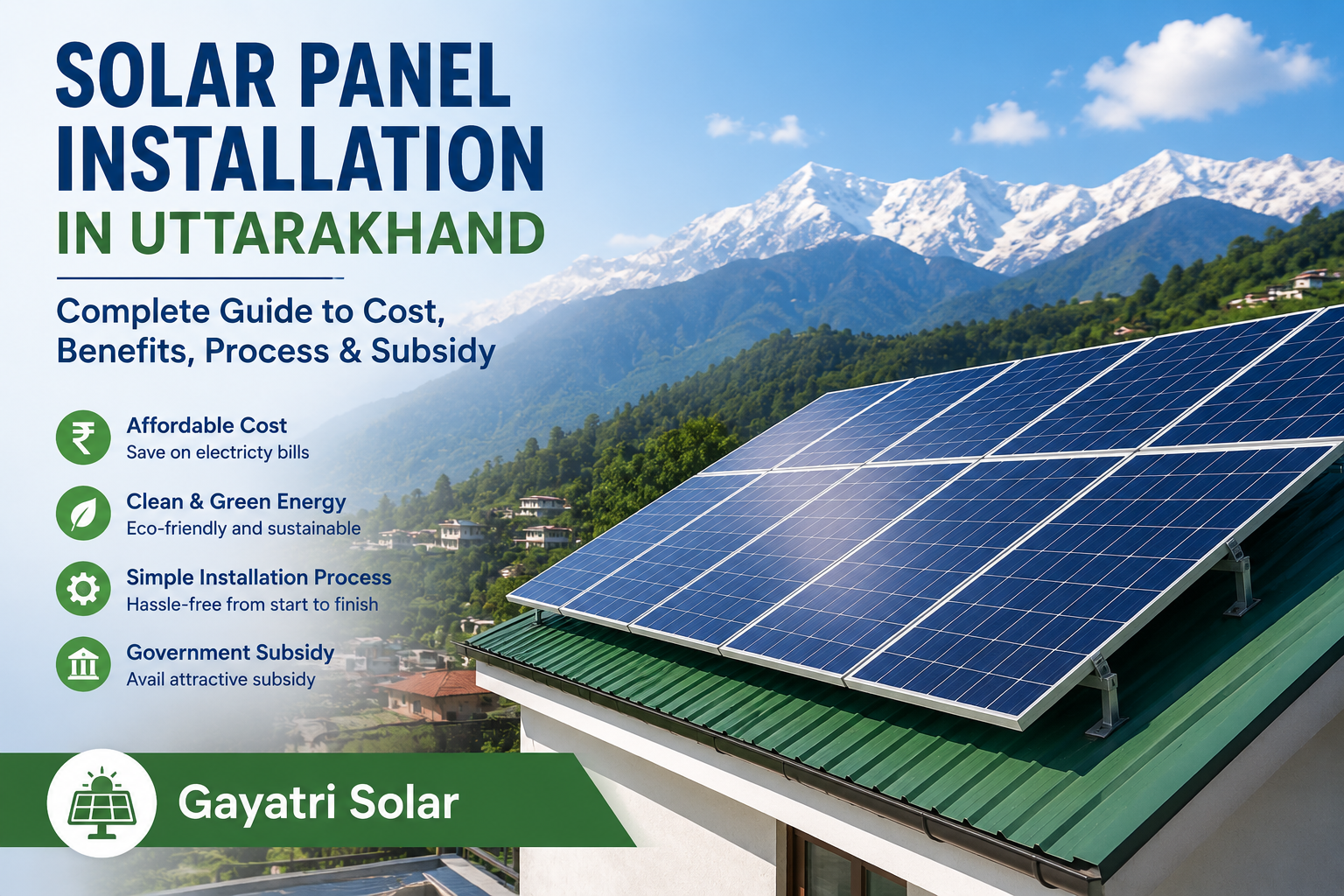
Solar Panel Installation in Uttarakhand: Complete Guide to Cost, Benefits, Process & Subsidy
Solar energy is becoming an increasingly popular choice for homes, businesses, institutions, and industrial properties across Uttarakhand. With rising electricity costs and growing awareness of renewable energy, installing a rooftop solar system can help reduce electricity expenses while supporting cleaner energy generation.
Gayatri Solar provides solar solutions designed to meet the requirements of residential and commercial customers. If you are considering Solar Panel Installation in Uttarakhand, understanding the cost, benefits, installation process, and available subsidy options can help you make a better decision.
Why Choose Solar Panel Installation in Uttarakhand?
Uttarakhand receives useful solar radiation throughout much of the year, making rooftop solar a practical option for many properties. A properly designed solar system can generate electricity from sunlight and reduce dependence on grid power.
Solar panels can be installed on residential rooftops, commercial buildings, schools, offices, factories, hotels, and other suitable properties.
For homeowners and businesses, the major advantages include:
- Lower monthly electricity bills
- Reduced dependence on conventional electricity
- Long-term energy savings
- Use of clean and renewable energy
- Low routine maintenance requirements
- Potential eligibility for applicable government incentives
- Increased energy independence
Solar Panel Installation Cost in Uttarakhand
The cost of a solar installation depends on several factors. There is no single price that applies to every property because system size, panel technology, inverter selection, mounting structure, installation conditions, and other components can affect the overall investment.
For example, a small residential rooftop system will generally have different requirements from a larger commercial solar project.
Before deciding on a system, customers should consider:
- Required solar capacity
- Monthly electricity consumption
- Available rooftop area
- Roof structure and orientation
- Type and efficiency of solar panels
- Inverter capacity and technology
- Mounting structure
- Electrical installation requirements
- Applicable subsidy or financial assistance
A professional site assessment can help determine the appropriate system size and estimated project cost.
Government Solar Subsidy in Uttarakhand
Government solar subsidy programs can make rooftop solar more affordable for eligible residential consumers. However, subsidy amounts, eligibility requirements, application procedures, and program rules can change over time.
Customers should verify the latest official guidelines before making financial decisions. The applicable subsidy may depend on factors such as system capacity, consumer category, and the specific government program.
A reliable solar company can also help customers understand the documentation and installation process associated with applicable subsidy programs.
Solar Panel Installation Process
A professional installation generally involves several important steps.
1. Site Survey
The solar installation team first evaluates the property and rooftop. Factors such as available space, roof condition, shading, orientation, and electrical requirements are considered.
2. System Design
Based on electricity consumption and site conditions, the appropriate solar capacity and system configuration are determined.
3. Component Selection
Solar panels, inverter, mounting structures, cables, protection equipment, and other required components are selected according to the project requirements.
4. Mounting Structure Installation
A suitable mounting structure is installed on the rooftop to securely support the solar panels. The structure should be designed according to the roof and local environmental conditions.
5. Solar Panel Installation
The solar modules are securely positioned and connected according to the system design. Proper alignment helps maximize solar energy generation.
6. Electrical Connections
The panels are connected to the inverter and other electrical components. Proper cabling, protection devices, earthing, and safety measures are important parts of the installation.
7. Testing and Commissioning
After installation, the complete system is inspected and tested. The system is then commissioned so that it can begin generating solar electricity.
How Much Rooftop Space Is Required?
The required rooftop area depends on the system capacity, panel dimensions, panel efficiency, mounting arrangement, and available space.
A professional site survey is therefore recommended before purchasing equipment. It helps determine how many panels can be installed and how the available rooftop area can be used efficiently.
On-Grid, Off-Grid and Hybrid Solar Systems
Different solar system configurations are available depending on the customer's requirements.
On-grid solar systems are connected to the electricity grid and are commonly used for homes and businesses looking to reduce their electricity bills.
Off-grid solar systems operate independently from the grid and generally require battery storage to provide electricity when solar generation is unavailable.
Hybrid solar systems combine solar generation with battery storage and grid connectivity, providing greater flexibility for certain applications.
The right system depends on electricity consumption, backup requirements, budget, and site conditions.
Benefits of Choosing Gayatri Solar
Choosing an experienced solar installation company is important for obtaining a reliable and properly designed system. Gayatri Solar focuses on providing solar solutions based on individual customer requirements.
The company can support customers through important stages of the project, including system planning, product selection, installation, testing, and service support.
A professionally installed solar system can provide better performance, improved safety, and easier long-term maintenance.
Maintenance of Solar Panels
Solar panels generally require limited maintenance, but regular inspection can help maintain system performance. Dust, leaves, bird droppings, and other debris can reduce the amount of sunlight reaching the panels.
Basic maintenance may include:
- Periodic panel cleaning
- Checking cables and electrical connections
- Inspecting the mounting structure
- Monitoring system performance
- Checking inverter operation
- Addressing faults promptly
The exact maintenance schedule depends on the installation environment and system design.
Who Can Benefit from Rooftop Solar?
Rooftop solar can be considered by:
- Homeowners
- Offices
- Schools and colleges
- Hotels and resorts
- Shops and commercial buildings
- Factories
- Warehouses
- Hospitals and institutions
Businesses with significant daytime electricity consumption may particularly benefit from generating their own solar power.
Conclusion
Solar Panel Installation in Uttarakhand can be a practical way to reduce dependence on conventional electricity and move toward cleaner energy. From residential rooftops to commercial projects, the right solar system can provide long-term energy benefits when it is properly designed and installed.
Understanding system capacity, installation cost, rooftop requirements, available subsidy programs, and maintenance is important before starting a solar project.
With professional planning and installation support, Gayatri Solar helps customers explore suitable solar solutions for their energy requirements. Contact Gayatri Solar to assess your property and determine the right solar installation for your needs.